A $100 card sale does not always cost the same amount to accept. The card type, how the payment is entered, and even the type of business you operate can change the cost of that transaction. For owners trying to manage margins, understanding interchange fees for small business is one of the clearest ways to separate unavoidable card costs from fees that may deserve a closer look.
Interchange is often discussed as though it is one fee charged by a processor. It is not. It is a broad category of transaction costs set by card networks and paid through the payment processing system. Your processor collects those costs, along with other fees and its own markup, then reports them on your merchant statement.
That distinction matters. A lower advertised rate is not automatically a lower total cost, and a higher statement total does not automatically mean your processor is overcharging you. The right answer depends on your card mix, average ticket, payment methods, equipment, software, and how customers check out.
What interchange fees actually cover
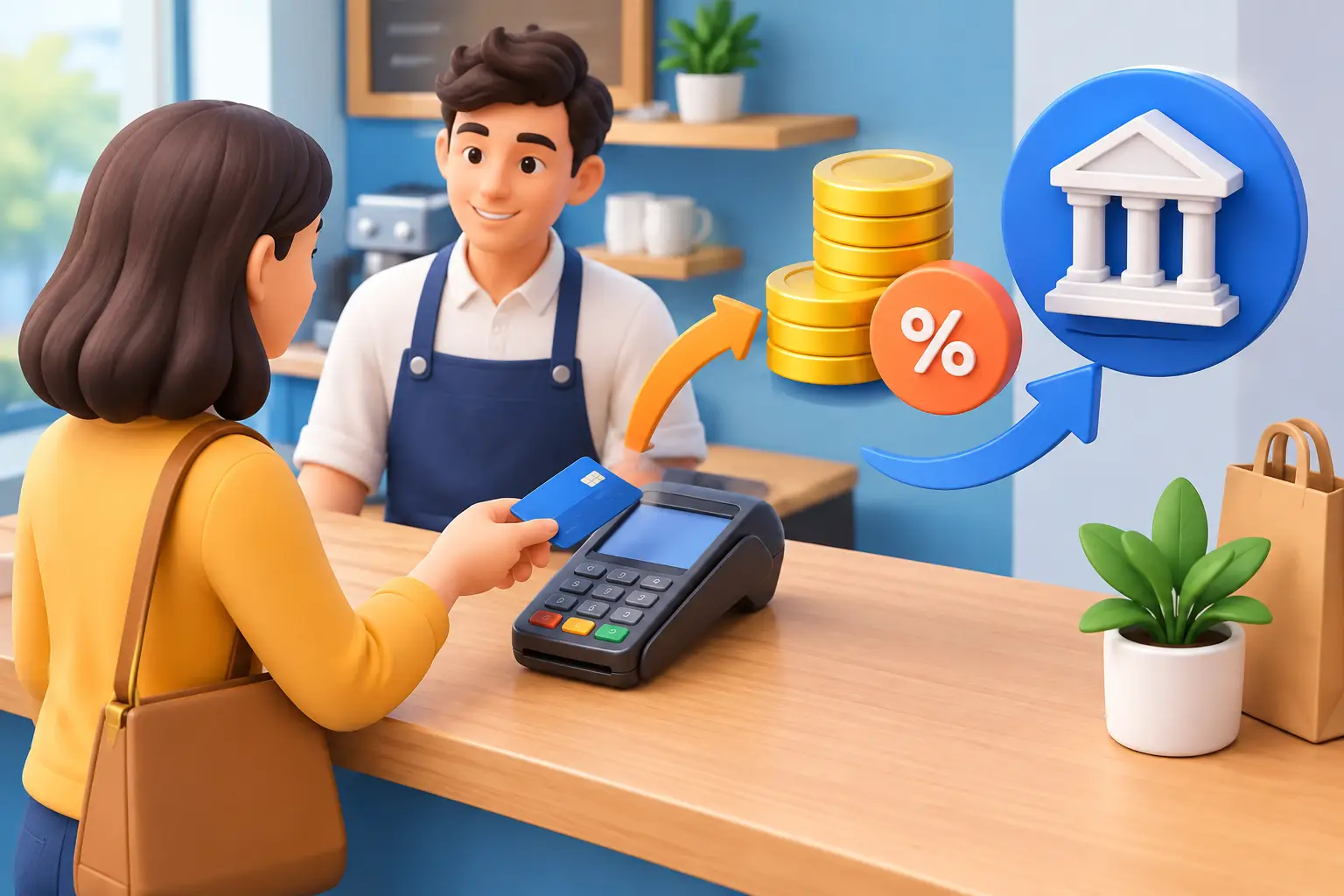
When a customer pays by credit or debit card, several parties help make the transaction happen. The cardholder's bank, called the issuing bank, takes on much of the risk of approving the purchase and funding it. Interchange is generally paid to that issuing bank. The card networks also charge separate assessment fees, while the payment processor charges for its service, technology, support, and account management.
A simple way to view the total cost is:
Interchange + card network assessments + processor markup = total processing cost
Interchange rates are typically set by the card networks, not by a local processor. That means a processor cannot simply erase interchange from a standard merchant account. What can often be reviewed is the processor's pricing structure, additional service fees, equipment costs, software charges, and whether transactions are being handled in the most cost-effective way available for the business.
For a restaurant, repair shop, dental office, salon, or retail store, this is where a statement review becomes more useful than a one-line rate quote. The goal is to understand what you are paying and why.
What drives interchange fees for small business
Interchange is not a single fixed percentage. Thousands of rate categories can apply, and the category assigned to a transaction can affect its cost. Most owners do not need to memorize those categories. They do need to know the operating decisions that can move transactions into higher-cost buckets.
Card type and customer rewards
Premium rewards cards, commercial cards, corporate cards, and certain purchasing cards often cost more to accept than basic consumer cards. A business that serves affluent consumers may see more rewards cards. A company that invoices other businesses may see more commercial cards. Neither pattern is necessarily a problem, but both can affect the blended rate shown on a monthly statement.
Debit transactions can follow different pricing rules than credit transactions. The actual result depends on whether the card is run with a PIN, the network used, and the processor's routing practices. A business should not assume every debit payment costs the same as a credit card payment.
How the payment is accepted
A chip card tapped or inserted at the counter is generally lower risk than a card number keyed in manually. Online payments, payments taken by phone, and recurring billing have different risk profiles and can carry higher costs.
This does not mean a home service company should stop taking payments over the phone or a medical office should avoid card-on-file billing. Those payment options can be valuable for customer convenience and collections. It means the business should use the right tools and procedures, such as secure payment links, customer-facing terminals, and properly configured recurring billing, to reduce unnecessary manual entry and protect customer data.
Business type and transaction details
Your merchant category code, average transaction amount, and industry can influence qualification. Certain businesses also have transaction rules that, when followed correctly, can help payments qualify at the expected rate.
For example, business-to-business sellers may benefit from providing enhanced transaction data when eligible. A tire store serving fleet accounts or a professional service firm billing corporate clients may have opportunities that a walk-up coffee shop does not. The available options depend on the transactions themselves, the POS or payment platform, and whether the required data can be captured accurately.
Authorization and settlement practices
Delays and missing transaction details can create avoidable costs. A transaction may be authorized one day but settled later, or it may be keyed without information that the network expects for that type of payment. In some cases, that can result in a less favorable interchange category.
This is an operational issue as much as a pricing issue. Staff training, terminal settings, POS integration, and a consistent process for closing out batches all matter. A processor change alone will not fix a workflow problem that continues after the new account is installed.
Why your effective rate can be misleading
Many business owners look at total fees divided by total card sales and call that number their processing rate. This effective rate is useful as a starting point, but it does not tell the whole story.
A 2.9% effective rate could be reasonable for one business and excessive for another. An online seller with a high percentage of rewards cards, manually entered transactions, and small tickets may have a different cost profile than a local retail store that accepts mostly tap-to-pay debit cards. Comparing rates without comparing payment behavior can lead to the wrong conclusion.
The same issue applies to flat-rate offers. Flat pricing can be simple and predictable, which may be a good fit for a newer business or one with low monthly volume. But as volume grows, the convenience premium can become meaningful. Interchange-plus pricing can offer more transparency, yet it may be harder to read without help. Neither model wins in every situation.
The better question is not, “What is the lowest rate?” It is, “What is the full cost of accepting payments for the way my business actually operates?”
What to look for on your merchant statement
A merchant statement should make it possible to identify card sales, interchange-related costs, assessments, processor fees, monthly minimums, PCI-related charges, equipment fees, software fees, and any added services. Unfortunately, statements are not always organized in a way that makes that easy.
Start by confirming your monthly card volume and transaction count. Then compare the total fees with the services you are receiving. A payment gateway, text-to-pay feature, POS software, next-day funding, or local support may be worth paying for if it solves a real operational need. A fee is not automatically unnecessary because it exists.
At the same time, watch for charges that no longer match your business. Common examples include rented terminals that could be replaced, duplicate software services, fees for unused features, nontransparent surcharges, or pricing that changed after an introductory period. Owners should also verify that the business name, deposit timing, and account setup reflect the operation they have today.
If the statement is difficult to understand, that is a reason to ask questions, not a reason to accept vague answers. A clear review should show which costs are network-driven, which are processor-driven, and which are tied to choices about equipment or software.
Lowering costs without creating a customer problem
The most productive cost reductions are usually practical rather than dramatic. Updating an outdated terminal can reduce manual keying and improve checkout speed. A better POS system can improve reporting, help staff follow consistent payment procedures, and support the specific workflows of a restaurant, shop, or practice. Reviewing processor markup can identify whether the account remains competitively priced for current volume.
Some businesses also consider cash discount or dual pricing programs. These programs can help offset card acceptance costs, but they must be set up carefully. Clear customer communication, proper signage, compliant receipt presentation, and correctly configured technology are essential. A program that confuses customers or is implemented incorrectly can create more problems than it solves.
There is also a customer experience trade-off. A high-ticket auto repair business may find that transparent dual pricing is accepted by its customers. A café with frequent small purchases may decide that fast, simple card acceptance is more valuable than changing the checkout conversation. The best approach should support profitability without undermining the relationships that keep customers coming back.
When a payment review is worth the time
A review is especially useful when card volume has grown, a contract or promotional pricing period is ending, a business is replacing its POS system, or owners are frustrated by monthly statements they cannot explain. It is also valuable after a business changes how it sells, such as adding online payments, recurring billing, mobile service calls, or multiple locations.
FeeFix Solutions approaches this review as a business decision, not a forced processor switch. The account, technology, checkout process, and long-term flexibility should all be considered together. If the current provider and setup are doing the job at a fair cost, keeping them may be the right decision.
Your payment costs should be understandable enough to manage. A clear statement review can turn interchange from a confusing line item into a practical conversation about margins, customer experience, and the payment setup that best supports your business.

