Margins in retail rarely disappear all at once. They get chipped away by freight, labor, shrink, and one of the most persistent costs of all: credit card processing. For many operators, a dual pricing program for retail stores has become a practical way to regain control without raising prices across the board.
The reason this model gets attention is simple. Card acceptance is expensive, and those costs usually come straight out of already thin margins. A properly structured dual pricing program gives retailers a way to present one price for cash and another for card transactions, with full transparency at the point of sale. When done correctly, it shifts the economics of payment acceptance while keeping the customer experience clear and compliant.
What a dual pricing program for retail stores actually does
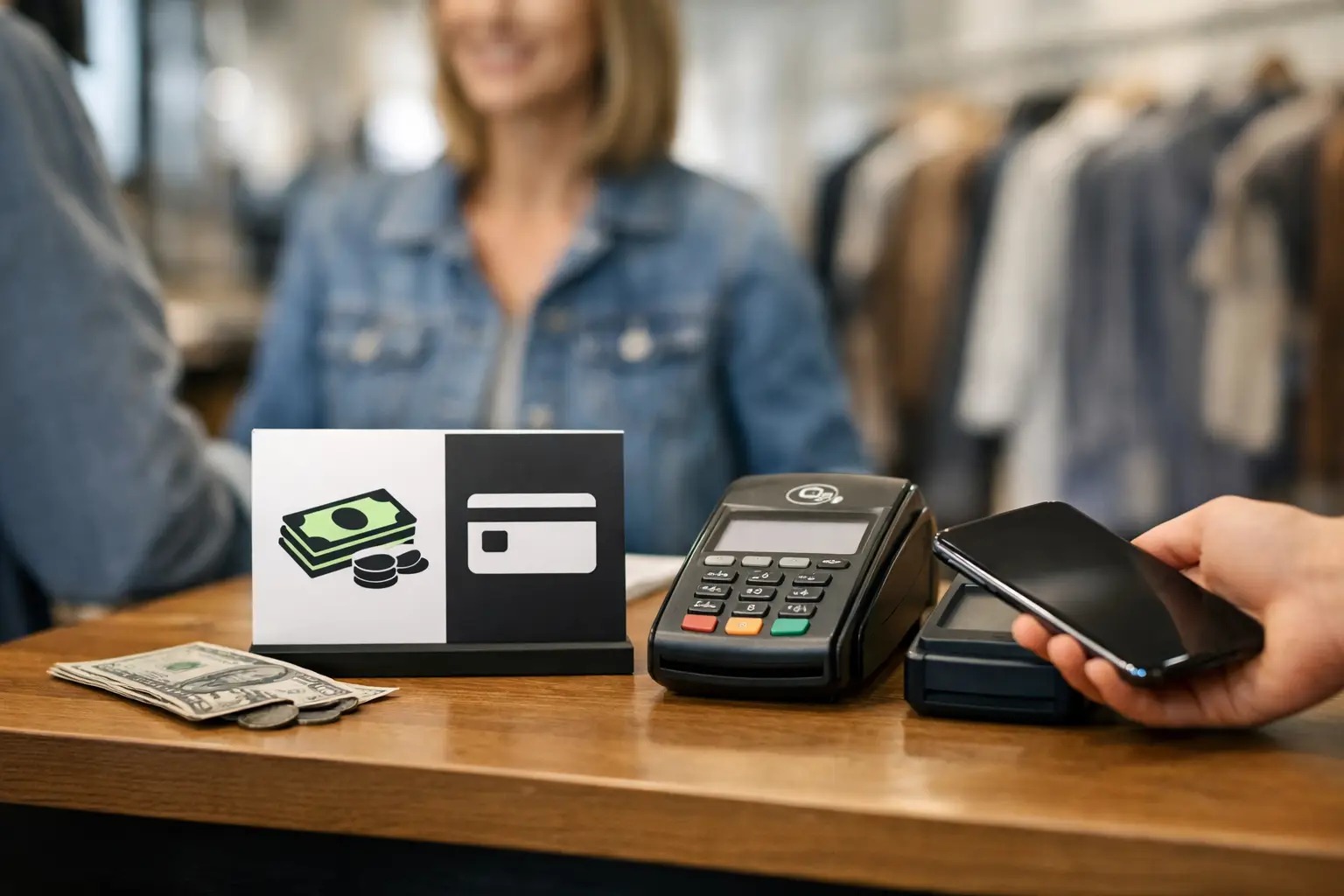
A dual pricing model displays two prices: a cash price and a card price. Customers who pay with cash receive the lower posted amount, while customers who choose to pay by card pay the card price. That difference is designed to account for the cost of card acceptance.
This is not the same as quietly adding a fee at checkout with no explanation. The structure has to be disclosed correctly, programmed correctly, and supported by signage and receipts that align with card brand and legal requirements. That is where many retailers get tripped up. The idea is straightforward, but the implementation matters.
For stores processing a steady volume of card transactions, the financial impact can be significant. Instead of absorbing processing fees as an unavoidable overhead line, the business creates a pricing framework that offsets or eliminates much of that expense.
Why retailers are paying closer attention now
Card usage is not slowing down, and processing expenses are not getting easier to absorb. For retailers selling lower-margin items, even a modest percentage in fees can create real pressure on monthly profitability. A business may be moving strong sales volume and still feel squeezed because too much of each transaction is going to payment costs.
That is why many owners and operators are rethinking the traditional model. Rather than treating processing fees as a fixed cost of doing business, they are asking whether the payment structure itself can be improved. In many cases, the answer is yes.
A dual pricing program can be especially attractive for convenience stores, liquor stores, tobacco retailers, specialty shops, auto parts stores, and other retail businesses where card volume is high and average ticket sizes make fee erosion noticeable. It can also work well in multi-lane environments where clear pricing and fast checkout are essential.
The business case behind dual pricing
The biggest advantage is margin protection. If your store is doing substantial card volume every month, reducing or removing that expense can create immediate bottom-line improvement. Unlike a broad price increase, dual pricing lets the business preserve a lower cash price while giving card-paying customers a transparent payment choice.
That matters because blanket price increases affect every customer, including those paying cash. Dual pricing is more targeted. It places the additional cost on the transaction method that creates the expense.
There is also a cash flow benefit. When payment costs are reduced, the business keeps more revenue in the operation. That can support payroll, inventory purchases, equipment upgrades, or simply a healthier operating cushion.
Just as important, the right program creates predictability. Instead of watching processing fees fluctuate and eat into revenue, retailers can operate with a clearer understanding of what they are retaining from sales.
Customer reaction depends on presentation
One of the first questions retail owners ask is whether customers will push back. The honest answer is that it depends on how the program is introduced and how clearly it is presented.
If dual pricing is implemented sloppily, customers notice the confusion first. If shelf labels, posted signs, receipts, and verbal explanations are inconsistent, the model creates friction. That is not a pricing problem as much as an execution problem.
When the structure is clear, most customers understand it quickly. They see that there is a cash price and a card price, and they choose the payment method they prefer. Retailers are often surprised by how little resistance they get once expectations are set properly.
The key is transparency. Customers do not like surprises at the register. They respond much better when pricing is disclosed upfront and the checkout experience matches what was presented on the sales floor.
Compliance is not optional
This is where many payment providers oversimplify the conversation. A dual pricing program is only valuable if it is set up in a compliant way. Retailers need to think beyond savings and focus on structure.
Compliance affects signage, receipt formatting, terminal programming, and how prices are displayed. It also depends on current card brand requirements and state-level considerations. A program that is pitched as a quick fix without careful setup can create exposure that outweighs the savings.
That is why retailer education matters. You need to know how prices will appear, what customers will see before they pay, and how the system handles each transaction type. A provider should be able to explain the model in plain language, not hide behind vague claims.
For many businesses, the real value is not just in the processing technology. It is in having a partner that can implement the program correctly, train staff, and provide support as questions come up.
Is a dual pricing program right for every retail store?
Not always. Some stores are excellent candidates, and others may need a different approach.
If your margins are tight, your card volume is high, and your customers are accustomed to transparent posted pricing, dual pricing can be a strong fit. If your store already has a modern POS environment and your team can communicate the model clearly, implementation tends to be smoother.
On the other hand, if your business depends heavily on a premium brand experience where even small checkout friction could affect customer perception, you may want to evaluate the trade-off more carefully. The same is true if your average tickets are very low and the economics need a closer review.
This is not a one-size-fits-all decision. The right question is not whether dual pricing is popular. The right question is whether it improves your economics without creating operational problems.
What retail operators should evaluate before making a move
Start with your current processing costs. Look at what you are paying each month, including effective rate, fixed fees, and any hidden charges. Many retailers know fees are high but have never reviewed the true annual impact.
Next, look at transaction mix. A store with heavy card usage has more to gain than one with a high percentage of cash sales already. Average ticket size, lane setup, and volume patterns also matter because they affect how meaningful the savings will be.
Then consider customer communication. Can your store present the pricing model cleanly at the entrance, at the shelf if needed, and at checkout? Can your staff answer simple questions confidently? Good execution is operational, not theoretical.
Finally, evaluate provider support. This is a critical step. A processor that only talks about savings but not compliance, signage, POS configuration, or staff training is leaving out the hard part. The better approach is to work with a partner that treats implementation as a business process, not just a sales pitch.
What a well-run rollout looks like
A strong rollout is measured and clear. The pricing structure is configured properly in the POS and terminal environment. Required signage is installed before launch, not after complaints begin. Receipts reflect the program accurately. Staff know how to explain the pricing in a calm, direct way.
The best rollouts also include monitoring after launch. Retailers should watch for customer questions, cashier consistency, and any exceptions in how transactions are processed. Small adjustments early can prevent larger issues later.
This is where experienced guidance makes a real difference. FeeFix Solutions works with businesses that want more than a lower quoted rate. They want a payment structure that protects margin, remains transparent to customers, and holds up operationally over time.
The bigger opportunity behind dual pricing
Retailers have spent years trying to negotiate processing rates lower, only to find that the savings are often marginal. A dual pricing program changes the conversation. Instead of asking how to pay a little less in fees, the business asks whether it should be paying those costs in the same way at all.
That shift is why this model continues to gain traction. It is not about gimmicks or hiding charges. It is about building a pricing structure that reflects the real cost of payment acceptance and gives the business a more durable margin position.
For retail operators who are tired of watching processing fees quietly erode profit, the smart next step is not guessing. It is reviewing the numbers, evaluating fit, and making sure any program is built to work correctly from day one. A better payment model should do more than reduce expense. It should make the business easier to run with confidence.

