
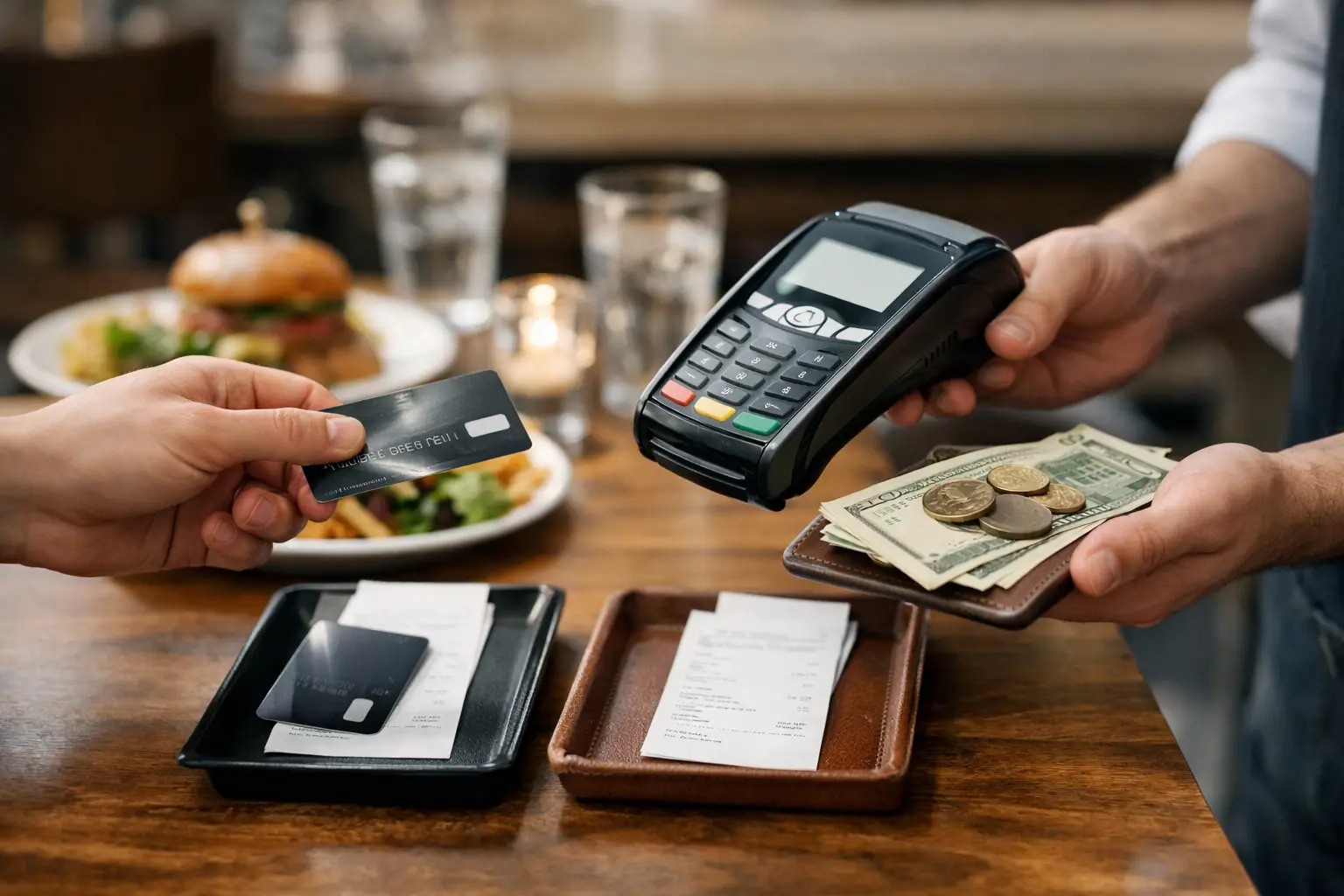
Card processing costs rarely look dramatic on a single ticket. But across a busy week of dine-in checks, online orders, bar tabs, and takeout transactions, those fees chip away at restaurant margin fast. A dual pricing program for restaurants is designed to address that problem directly by giving guests a clear cash price and a card price, so the business is not forced to absorb every processing cost as a fixed hit to profit.
For restaurant operators, that matters because payment expense is one of the few line items that can keep rising even when you are already controlling labor, food cost, and inventory. If your concept runs on tight margins, recovering those fees in a compliant, transparent way can make a measurable difference.
What a dual pricing program for restaurants actually does
A dual pricing structure presents two prices to the customer: one for cash and one for card. The card price reflects the cost associated with electronic payment acceptance, while the cash price is typically lower. The key point is transparency. Customers see the pricing structure up front rather than encountering a vague or confusing charge after the fact.
That distinction matters. Restaurants need a payment model that works in a fast-paced environment where guest experience is tied closely to speed, clarity, and trust. A properly implemented dual pricing program is not just a pricing adjustment. It is an operational system that affects menus, signage, staff communication, POS configuration, receipts, and compliance.
When done correctly, the program allows a restaurant to reduce or eliminate the burden of processing costs without turning checkout into an argument. When done poorly, it can create confusion, damage perception, or increase compliance risk. That is why structure matters more than the headline promise of saving money.
Why restaurants are looking at dual pricing now
Restaurants feel card fees differently than many other businesses because ticket volume is high, margins are narrow, and payment mix keeps shifting toward cards and digital wallets. Even operators with strong sales can watch profitability tighten when processing expenses rise quietly in the background.
A restaurant may increase menu prices to absorb those costs, but that approach spreads payment expense across every guest, including people who pay cash. It also makes pricing less precise. A dual pricing model gives the operator more direct control by tying card-related cost to card usage.
That control is especially valuable for independent restaurants, fast-casual operators, and multi-location groups that want more predictability in net revenue. It can also help owners avoid the cycle of making repeated menu price increases just to keep pace with overhead that customers never see.
The operational side restaurants need to think through
The financial case is usually easy to understand. The operational side is where the real decision gets made.
Restaurants process payments in more ways than most merchants. There is dine-in, curbside, takeout, delivery, online ordering, phone orders, catering, and sometimes self-service kiosks. A dual pricing program has to work cleanly across those channels. If the in-store experience is clear but online pricing is inconsistent, the restaurant can create friction fast.
POS setup is another major factor. Your system needs to display, calculate, and print transactions correctly. Receipts should match the pricing structure exactly. Staff also need a simple explanation they can deliver without sounding defensive or uncertain. In a restaurant, if the cashier or server hesitates at checkout, the customer notices.
This is where many operators benefit from a partner that understands both payments and implementation. The savings may start with fee reduction, but long-term success depends on whether the program fits daily service flow.
Customer perception is a real factor
Restaurant owners are right to ask whether guests will push back. The honest answer is that it depends on your concept, your market, and how the pricing is presented.
In many cases, customers respond well when the program is transparent and easy to understand. People are already familiar with price differences tied to payment method in other industries. What they tend to reject is surprise. If a guest only learns about a card-related increase after the meal, the issue becomes trust, not price.
Clear signage, accurate menu presentation, and confident staff communication reduce that risk. So does consistency. If every touchpoint tells the same story, the pricing model feels intentional rather than improvised.
Higher-end restaurants may need to think more carefully about brand perception and guest expectations. In fine dining or hospitality-driven concepts, the business may decide that a pure dual pricing model is less attractive than building costs into menu pricing. For quick-service, casual dining, pizza, cafes, bars, and many neighborhood concepts, dual pricing often aligns more naturally with how customers already buy.
Compliance is not optional
This is the part restaurant operators should take seriously. A dual pricing program is not simply a matter of adding a fee and calling it done. Payment regulations, card brand rules, and disclosure requirements all need to be handled correctly.
That includes how prices are displayed, how receipts are printed, and how the program is described to customers. The structure has to be compliant, not just profitable. A setup that saves money but creates exposure is not a good business decision.
This is one reason experienced restaurant operators avoid one-size-fits-all processing pitches. The right program should be designed around your environment, your average ticket, your payment mix, and the way your restaurant actually serves customers. Compliance and operational clarity need to be built in from the start.
Where dual pricing tends to work best in restaurants
Not every restaurant gets the same result. Concepts with high card volume and steady transaction count usually see the clearest impact. Fast-casual restaurants, counter-service concepts, coffee shops, bars, pizzerias, and takeout-heavy operations often have a straightforward path because the payment interaction is quick and repeatable.
Multi-location operators can also benefit when they want consistency across stores and better control over margin at scale. If processing costs are spread across several units, even a modest improvement in payment economics can add up quickly.
Restaurants with a heavy online ordering mix need to review implementation carefully. The model can still work, but digital channels must reflect the pricing structure properly. The more ordering environments you manage, the more important it becomes to get the setup right.
What restaurant owners should ask before moving forward
The first question is not how much you can save. It is whether the program can be implemented clearly across your full operation. That means asking how the pricing will appear on menus, receipts, and POS screens, how online orders will be handled, and what staff will say when customers ask about it.
The second question is about compliance. You want a provider that can explain the structure in plain language and show how disclosures, signage, and transaction formatting will be handled.
The third question is about support after onboarding. Restaurants are not static businesses. Menus change, systems change, locations expand, and ordering channels evolve. A dual pricing setup should not be treated like a one-time install with no follow-up.
That is where a consultative partner adds value. FeeFix Solutions works with businesses that want more than a generic processor quote. The goal is to improve margin through a compliant structure that makes operational sense, not just to swap one rate sheet for another.
The real business case
A dual pricing program for restaurants is not about squeezing customers. It is about correcting a cost structure that has gradually shifted too much burden onto the merchant. If your restaurant accepts a high volume of card payments, absorbing every processing fee as a default expense can become an unnecessary drag on profitability.
The right program gives you a way to recover that cost with transparency, maintain cleaner payment economics, and protect margin without relying solely on across-the-board menu price increases. That does not mean it is right for every concept. Brand positioning, guest expectations, service model, and channel mix all matter.
But for many restaurant operators, the question is no longer whether processing fees are hurting margin. It is whether there is a better way to manage them. A well-structured dual pricing model can be that answer when it is built carefully, explained clearly, and aligned with how your restaurant actually runs.
If you are considering one, focus less on the sales pitch and more on the quality of the structure. The right setup should feel clear to your team, fair to your customers, and meaningful on your bottom line.

