A dual pricing program can help a business recover some of the cost of accepting cards, but the savings disappear quickly if customers see one price on the shelf and another at checkout. Dual pricing compliance for merchants is not just a processing setting. It is a customer-facing pricing practice that must be set up clearly, applied consistently, and supported by the right equipment.
For a San Antonio restaurant, repair shop, medical office, or retail store, the goal is straightforward: give customers a transparent choice between a cash price and a card price while keeping checkout simple. The details behind that goal matter.
What dual pricing means at the point of sale
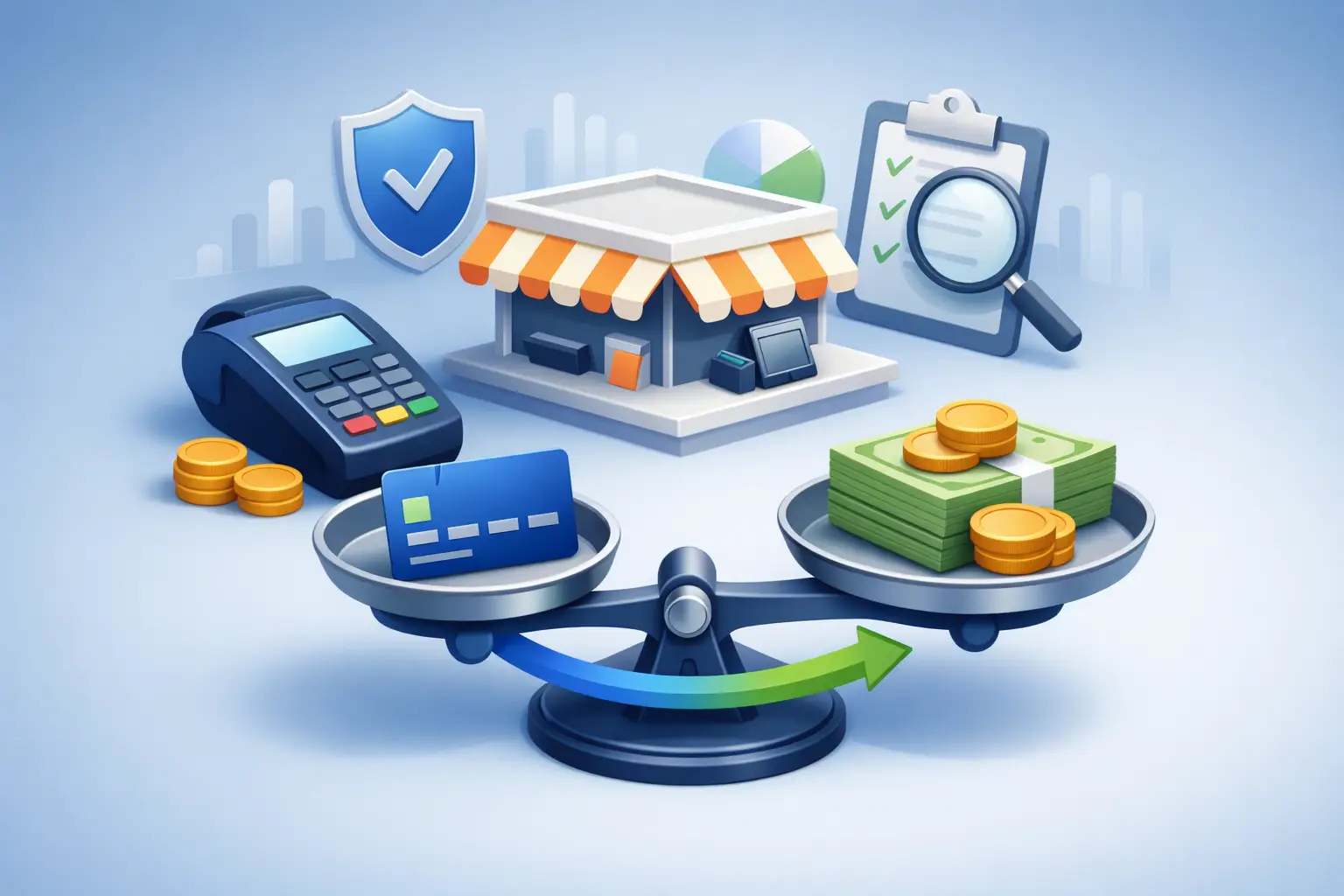
Dual pricing means a merchant offers two displayed prices for the same product or service: one price for cash and one price for card payment. The card price may reflect the cost associated with accepting credit and debit cards, while the cash price provides a discount for customers who pay with cash.
That distinction is more than wording. A properly structured dual pricing program presents both prices as actual prices available to the customer. It is different from adding a surprise fee after a customer has already chosen an item or received a service.
For example, an auto repair shop may display a $100 card price and a $96 cash price for a service. A customer can see both options before paying and choose the payment method that works for them. The same principle applies whether the business uses price tags, a service menu, an estimate, an invoice, or a POS screen.
Why dual pricing compliance for merchants matters
Business owners often focus first on the potential reduction in processing expense. That is understandable. Card acceptance costs can take a meaningful bite out of margins, especially for businesses with higher average tickets or tight pricing.
However, a program that is poorly communicated can create disputes, refunds, negative reviews, and employee confusion. It can also create problems if it does not align with applicable laws, network requirements, processor rules, or the terms of the merchant account.
Compliance protects more than the business account. It protects the customer experience. When pricing is clear before the customer commits to a purchase, most customers understand the choice. When the difference appears unexpectedly on the receipt, the same amount can feel like a hidden charge.
The best program is not always the one with the largest advertised savings. It is the one your team can operate consistently, your customers can understand immediately, and your payment system can calculate correctly.
Clear disclosure starts before checkout
Customers should know that cash and card prices differ before they reach the payment terminal. The right disclosure method depends on the business, but it should match the way customers make purchasing decisions.
A retail store may need shelf labels or product tags that show both prices. A restaurant may need menu language and signage near the register. A dental office or home service company may need the dual pricing policy reflected in estimates, treatment plans, or invoices issued before payment.
General signs alone are often not enough when individual prices are presented elsewhere. If an item is marked with only a cash price, a customer may reasonably believe that is the price they will pay regardless of tender type. Displaying both prices where the product or service price appears is clearer and easier to defend.
Your wording should also be direct. Terms such as “cash price” and “card price” are easier for customers to understand than vague statements about a “non-cash adjustment.” The objective is transparency, not clever phrasing.
The terminal must match the displayed price
The payment terminal is the final checkpoint, not the first disclosure. It should accurately apply the card price when a customer pays by card and the cash price when they pay with cash. The receipt should also make the transaction easy to understand.
This is where many programs break down. A business may have proper window signage but use a terminal that adds a separate fee at the end of the transaction. Or staff may manually enter different totals, increasing the risk of errors and inconsistent pricing.
A properly configured POS system or payment terminal reduces that risk. It should recognize the tender type, calculate the correct price automatically, and present the final amount before the customer completes payment. Manual workarounds may be tempting, but they are difficult to manage across multiple employees, shifts, locations, and changing prices.
Avoid confusing dual pricing with surcharging
Dual pricing, cash discounting, and credit card surcharging are related but different approaches. Treating them as interchangeable can lead to compliance mistakes.
With dual pricing, customers see a cash price and a card price. With a cash discount program, the business may advertise a standard price and offer a discount to customers paying with cash. A surcharge program generally adds a fee to certain card transactions, often with specific disclosure, registration, and operational requirements.
The right approach depends on your industry, customer expectations, transaction size, card mix, state requirements, card network rules, and payment technology. For example, a business that accepts many debit card payments needs to understand how debit transactions are handled. A medical practice may place a higher value on a calm, predictable patient payment experience than on maximizing cost recovery. A busy café may prioritize a fast checkout flow.
Do not assume that a program sold as “zero cost processing” is automatically compliant or appropriate for your business. Ask how prices will be displayed, how debit cards are handled, what appears on receipts, and what happens if your POS system goes offline or an employee enters a transaction manually.
Build a process your staff can follow
Even the best technology needs a simple operating process. Employees should be able to explain the program in one clear sentence: “We offer a cash price and a card price, and both are posted before payment.” If the explanation requires a long script, customers are more likely to leave confused.
Staff training should cover when the pricing difference applies, how to respond to customer questions, how to issue refunds, and what to do when a price is entered incorrectly. Managers should also know who can change pricing settings and how those changes are documented.
It is wise to test real transactions before going live. Run a cash sale, a credit card sale, a debit card sale, a refund, and a split-tender transaction. Compare the amounts shown on signage, the POS screen, the terminal, and the receipt. A program may look correct during a demonstration but fail in an everyday situation such as a partial refund or a keyed-in payment.
Review your pricing program regularly
Compliance is not a one-time installation task. Pricing changes, software updates, card network rules, processor policies, and state requirements can affect how a program should operate. A periodic review helps catch gaps before they become customer complaints or account issues.
Review your signs and menus when prices change. Check that new employees understand the policy. Confirm that terminal and POS updates have not altered the calculation. Look at a sample of receipts, including refunds and adjusted transactions. If you operate more than one location, confirm each site is using the same approved process.
A review should also measure the business outcome. Are you actually reducing processing costs? Are customers raising objections? Has checkout slowed down? A program that saves money but damages repeat business may not be the right fit. In some cases, better processor pricing, a different POS configuration, or a traditional cash discount program may serve the business better.
Get the setup right before you announce it
Before implementing a dual pricing program, review your current merchant statement, POS capabilities, terminal configuration, customer pricing displays, and operating workflow. This gives you a realistic picture of whether dual pricing fits your business and what changes are needed to support it.
FeeFix Solutions helps business owners evaluate these details before recommending a path forward. The focus is not simply on moving a processing fee. It is on building a payment experience that is transparent for customers, practical for employees, and aligned with the way the business actually operates.
A well-run dual pricing program should feel ordinary to the customer: two clearly posted prices, a simple choice, and no surprise at the terminal. That is the standard worth protecting.

