
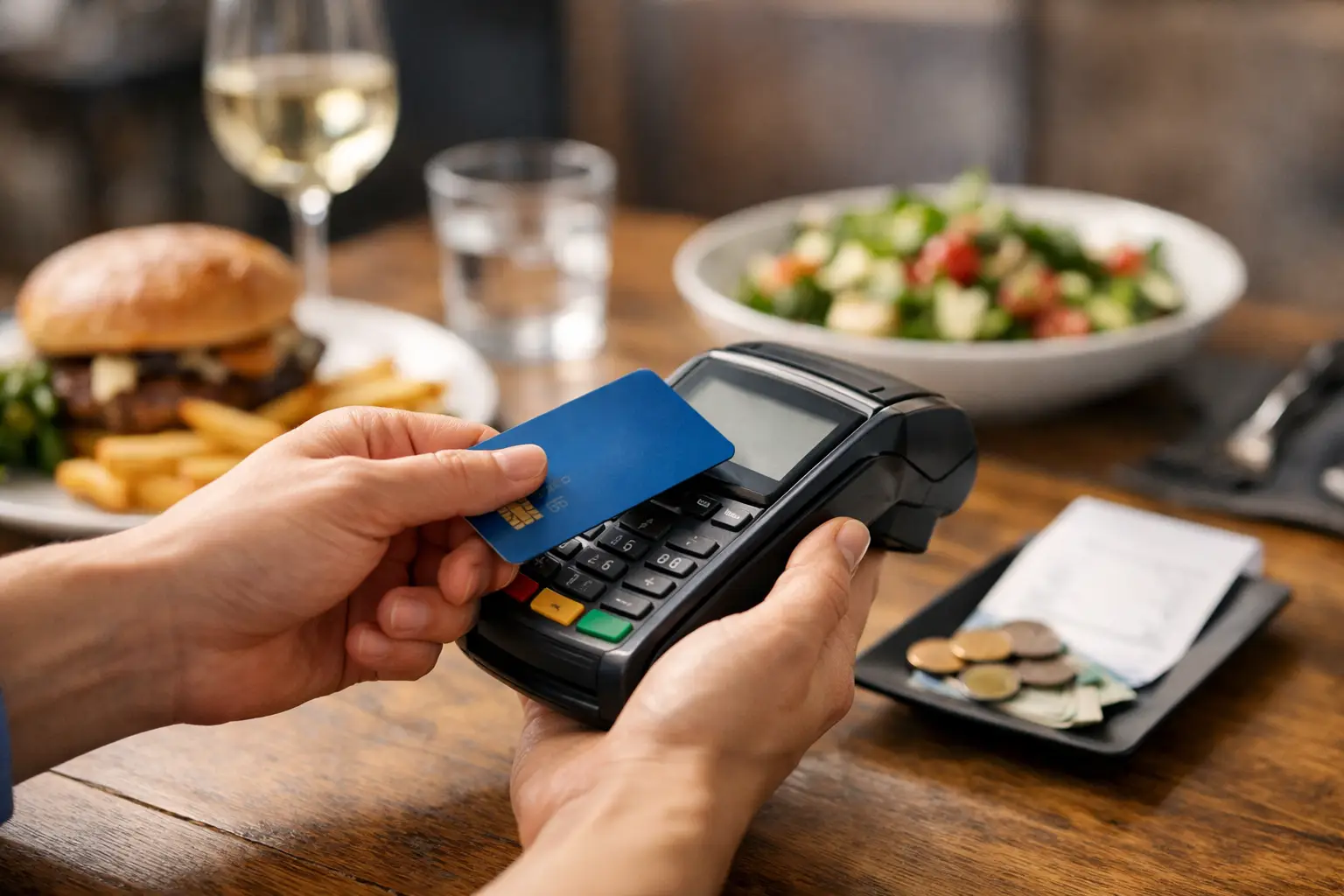
A busy dinner service can look great on paper until the card batch closes and a piece of every ticket disappears into processing costs. For operators running on tight margins, card processing fees for restaurants are not a minor line item. They directly affect labor flexibility, food cost pressure, and how much profit is left at the end of the month.
Restaurant owners usually feel the problem before they fully see it. Sales stay steady, guest counts look healthy, but net margins remain stubbornly thin. One reason is simple: the cost of accepting cards has climbed while average check management has become harder. When more guests tap, swipe, or order online, payment expense grows with them.
Why card processing fees for restaurants add up fast
Restaurants are especially exposed to payment costs because they process a high volume of small and mid-sized transactions, often across multiple channels. A full-service restaurant may run in-person payments, online ordering, third-party pickup, catering deposits, and recurring house account charges. Each channel can carry different fee implications.
Then there is tipping. Adjusted tickets, pre-authorizations, and delayed settlement can all affect how transactions are categorized and processed. If the setup is not optimized, the restaurant may be paying more than necessary on perfectly normal card activity.
Processing fees also hit restaurant margins harder than they hit some other industries because foodservice profit is already compressed. If a location clears only a few cents on the dollar after payroll, occupancy, inventory, and spoilage, giving up another 2% to 4% in card expense is significant. That is not an accounting detail. It is a profitability issue.
What makes up restaurant card processing costs
Most restaurant operators see one monthly processing statement and one withdrawal from the bank, but the total cost usually comes from several moving parts. Interchange fees go to the card-issuing banks. Assessment fees go to the card brands. Processor markups and account fees come from the payment provider.
On top of those basics, restaurants may also face gateway fees, PCI-related charges, monthly minimums, statement fees, chargeback fees, batch fees, and equipment costs. Some providers present pricing clearly. Others bury margin in complicated statements that are difficult to audit.
That is where many operators lose control. The issue is not only the rate. It is the structure behind the rate. A quote that sounds competitive can still produce higher effective costs once all fees are included.
The pricing models matter more than many owners realize
Flat-rate pricing is simple, but simplicity does not always mean lower cost. It can work for very small operators with limited volume, yet restaurants processing meaningful monthly revenue often outgrow it quickly.
Interchange-plus pricing is generally more transparent because it separates the underlying card costs from the processor markup. That makes it easier to evaluate what the provider is actually earning.
Tiered pricing tends to create the most confusion. Transactions can be routed into qualified, mid-qualified, or non-qualified buckets, and many restaurant owners have no practical way to predict where most of their sales will land. If clarity and cost control are the goal, that uncertainty can be expensive.
The restaurant-specific factors that push fees higher
Not every restaurant pays the same effective rate, even at similar sales volume. Quick-service concepts often see heavy debit usage and faster payment cycles, while full-service restaurants may process more rewards cards, larger tickets, and tip-adjusted transactions. Fine dining and bar-heavy environments can have their own mix of premium cards and higher average tabs.
Online ordering is another major factor. Card-not-present transactions typically cost more than in-person payments because they carry higher risk. If a restaurant has shifted a large share of business to digital channels, the payment mix can materially change the monthly expense picture.
Chargebacks also matter. Restaurants that handle large catering orders, private events, or online disputes may absorb more fees and administrative friction than they expected. Even a manageable chargeback ratio creates cost beyond the dispute itself.
How to evaluate whether your current setup is working
Many operators judge processing by asking one question: what rate am I paying? That is understandable, but it is not enough. A better question is whether the payment setup supports the economics of the business.
Start with the effective rate, which is total processing cost divided by total card sales. Then compare that figure against transaction type, sales channel, average ticket, and monthly volume. If the effective rate seems high, the next step is to identify why. Is it interchange mix? Is it processor markup? Is it extra monthly fees? Is the POS integration creating avoidable cost?
It also helps to review whether the equipment and software environment are pushing the restaurant into a closed system. Some POS providers tie merchants into processing arrangements that limit pricing flexibility. Convenience on the front end can translate to expensive constraints on the back end.
A strong advisor will look at the whole picture, not just the headline rate. That includes statement analysis, operational flow, customer experience, compliance requirements, and how pricing is communicated at the point of sale.
A different approach: reducing or eliminating the merchant-paid fee
For many restaurants, the biggest opportunity is not shaving a few basis points off a traditional processing model. It is changing the model itself.
A compliant dual pricing program allows the business to present a cash price and a card price transparently, so the cost associated with card acceptance is not absorbed entirely by the merchant. Done correctly, this can significantly reduce or even eliminate the restaurant’s card processing expense while keeping the customer experience straightforward.
This approach gets attention because the savings can be meaningful. For a restaurant processing substantial monthly card volume, reclaiming that expense can improve margin without raising menu prices across the board. That matters in an environment where labor, ingredients, rent, and delivery-related costs are all competing for the same dollar.
That said, implementation matters. A dual pricing program should not be improvised. Signage, receipts, POS programming, and customer-facing communication all need to be set up correctly. Compliance is not optional, and neither is clarity.
When dual pricing makes sense for a restaurant
It tends to work best for operators who process a healthy volume of card sales and want a predictable path to margin improvement. It can be especially compelling for independent restaurants, multi-unit groups, bars, quick-service concepts, and hospitality operators that feel constant pressure from payment expense.
It may be less attractive for businesses that believe their guest base would be unusually price-sensitive to visible card pricing differences, or for concepts that have brand-positioning concerns about how charges are presented. Even then, the answer is not always no. It often comes down to execution, customer demographics, and how clearly the pricing model is explained.
What restaurant owners should ask before making a change
If you are reviewing providers or considering a fee-reduction strategy, ask direct questions. What is the true effective rate today? Are there non-obvious monthly fees? Is the system compatible with your current POS? How are online orders handled? What compliance standards apply? What training is provided for staff?
You should also ask what the transition looks like after installation. Good payment support is not only about onboarding. It is about statement reviews, troubleshooting, and making sure the pricing structure continues to work as the business evolves.
That is where a consultative partner stands apart from a processor that competes only on a teaser rate. FeeFix Solutions works with businesses that want more than a lower quote. They want a structured way to improve margins, maintain transparency, and avoid compliance mistakes that can create larger problems later.
The real goal is margin control, not just fee reduction
Restaurants do not win by treating payment processing as a fixed cost that cannot be changed. They win by managing it the same way they manage labor, purchasing, and menu performance.
If your current processor is taking a quiet percentage off every transaction and giving little visibility in return, that is worth revisiting. The right payment strategy can turn a recurring expense into a controllable part of the business model.
For restaurant operators, that shift is not about chasing gimmicks or cutting corners. It is about protecting margin in a business where every percentage point counts. When card acceptance is structured properly, the result is not just lower cost. It is more room to operate, invest, and grow with confidence.

